
A Doctor’s Guide to Blue Light, Cortisol, and the 3 AM Spiral
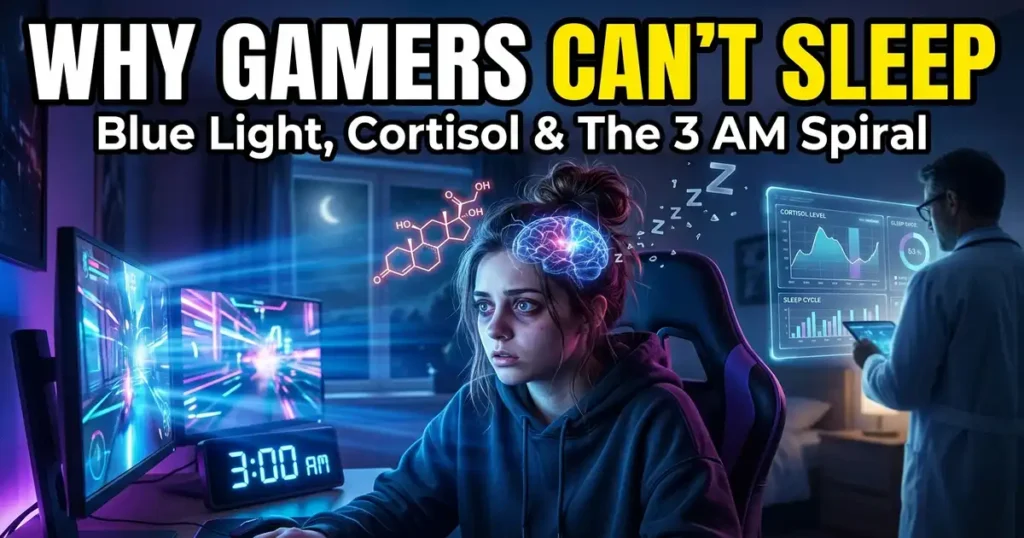
As a medical doctor, I often see patients struggling with fatigue, brain fog, anxiety, and severe sleep problems after long gaming sessions. Many gamers think the issue comes from “too much caffeine” or “bad habits.” However, the real problem often starts deep inside the brain.
The biggest hidden trigger is the blue light effects on gamers sleep patterns. Screens change hormone levels, overstimulate the nervous system, and confuse the body’s natural sleep clock.
Today, competitive gaming has become more intense than ever. Players grind ranked matches until 2 or 3 AM. Streamers stay online for long hours. Meanwhile, many gamers slowly develop insomnia without realizing the damage happening inside the brain.
I personally noticed this during late-night gaming sessions with friends. We felt “awake” even after hours of exhaustion. Our minds stayed active long after shutting down the PC. Some nights we could not sleep until sunrise.
What Happens to the Brain During Late-Night Gaming?
The brain treats gaming like stimulation and competition. Fast movement, flashing lights, loud sounds, and reward systems activate powerful brain circuits.
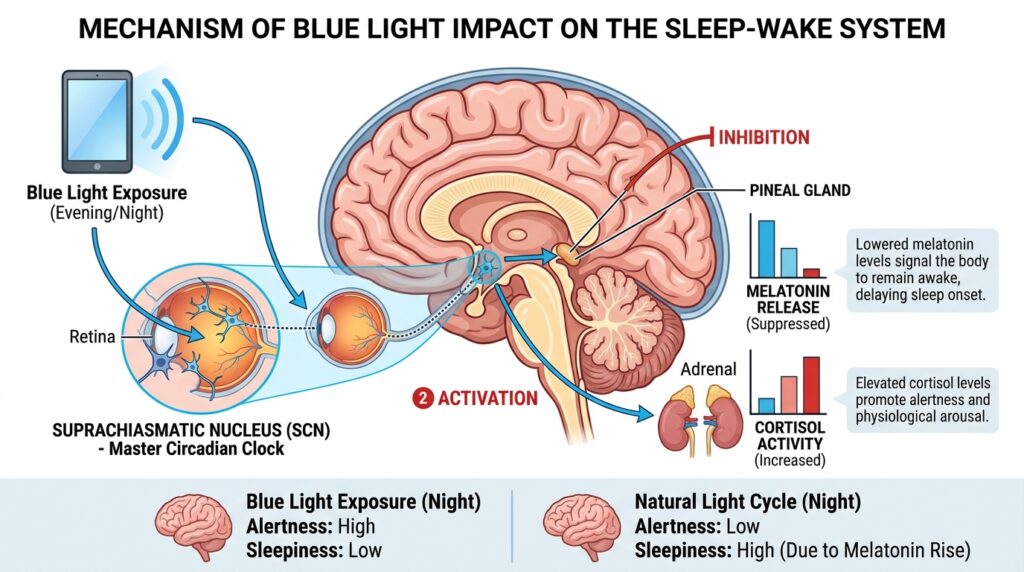
The blue light effects on gamers sleep become worse because screens suppress melatonin production. Melatonin is the hormone that tells your body it is time to sleep.
Think of melatonin as your brain’s “night mode.”
Blue light acts like sunlight. It tricks the brain into believing daytime still exists.
As a result:
- Cortisol levels rise
- Alertness increases
- Heart rate stays elevated
- Sleep cycles become delayed
- Deep sleep quality drops
Eventually, gamers enter what I call the “3 AM spiral.”
You feel tired physically. Yet mentally, you feel completely awake.
The Neuroscience Behind Blue Light and Cortisol
The Neuroscience
The blue light effects on gamers sleep involve several important brain regions.
These include:
- Ventral tegmental area (VTA)
- Nucleus accumbens
- Suprachiasmatic nucleus (SCN)
- Prefrontal cortex
Gaming stimulates dopamine release inside the nucleus accumbens. Dopamine acts like reward fuel.
Imagine your brain as a high-speed racing car.
Dopamine is the fuel. Cortisol is the accelerator. Blue light is the false sunlight keeping the race active.
The ventral tegmental area sends dopamine signals during rewards, victories, kills, loot boxes, and competitive achievements. Meanwhile, the suprachiasmatic nucleus controls your circadian rhythm.
Blue light directly affects this clock.
When screens hit your eyes at midnight, the SCN delays melatonin release. Then cortisol stays elevated longer than normal.
Research from the National Institutes of Health shows that blue light exposure at night suppresses melatonin significantly and shifts circadian timing.
Another study published on PubMed found that evening screen exposure increases sleep latency and reduces REM sleep quality.
Additionally, researchers from Harvard Medical School explained that blue light exposure can disrupt the body clock more strongly than many other light wavelengths.
Symptoms Gamers Usually Ignore
Many gamers do not connect their symptoms to sleep disruption.
However, the blue light effects on gamers sleep can create serious physical and mental symptoms.
Common signs include:
- Brain fog
- Mood swings
- Eye strain
- Anxiety
- Irritability
- Slow reaction time
- Low motivation
- Morning fatigue
- Headaches
- Difficulty focusing
Some gamers also develop mild depression symptoms because dopamine systems become overstimulated.
The problem becomes worse when players use caffeine, energy drinks, or nicotine during gaming.
Why Cortisol Stays High at Night
Cortisol is not always bad.
In fact, cortisol helps you wake up and stay alert during the daytime.
However, nighttime cortisol spikes create major problems.
The blue light effects on gamers sleep increase cortisol because the body stays in “performance mode.”
Competitive games trigger stress responses.
Ranked matches increase adrenaline. Fast action increases dopamine. Losses increase frustration. Social pressure increases anxiety.
Your brain cannot easily relax afterward.
Unfortunately, many gamers jump directly from intense gaming into bed. The nervous system never gets time to cool down.
That creates the dangerous 3 AM spiral.
- You scroll TikTok.
- You watch YouTube.
- You open Discord.
- You queue “one last game.”
Suddenly the clock says 3:47 AM.
How Poor Sleep Destroys Gaming Performance
Ironically, sleep deprivation makes gamers worse at gaming.
The blue light effects on gamers sleep reduce:
- Reaction speed
- Hand-eye coordination
- Decision making
- Memory consolidation
- Emotional control
Sleep acts like a recovery system for the brain.
Without enough deep sleep, dopamine receptors become less sensitive. That means gamers need more stimulation to feel excitement.
This cycle resembles tolerance in addiction pathways.
Research suggests sleep loss also weakens the prefrontal cortex. As a result, impulse control drops significantly.
That explains why tired gamers rage more often.
Practical Protocols to Reset Your Sleep
Practical Protocols
Here are evidence-based strategies I recommend for gamers.
- Stop Gaming 60–90 Minutes Before Sleep
This single habit dramatically improves recovery.
The nervous system needs time to shift from stimulation into relaxation mode.
Use this time for:
- Reading
- Stretching
- Walking
- Calm music
- Meditation
- Use Blue Light Filters
Blue light blocking glasses can help reduce melatonin suppression.
Night mode settings also reduce blue wavelength intensity.
However, filters alone will not completely fix the issue.
- Lower Screen Brightness Brightness
matters more than many gamers realize.
Dim your monitor at night.
Turn off unnecessary LED lights in your room.
- Avoid Energy Drinks After 6 PM
Caffeine stays in the bloodstream for hours.
Late caffeine increases cortisol and delays sleep cycles further.
- Create a Sleep Shutdown Routine
Train your brain to recognize bedtime.
Simple routines work best.
For example:
- Hot shower
- Herbal tea
- Low lights
- No ranked matches
- Calm breathing
How Gaming Addiction Changes Dopamine
The blue light effects on gamers sleep often overlap with dopamine dysregulation.
Games provide fast rewards every few seconds.
Kills. Wins. Achievements. Loot. XP. Notifications.
Over time, normal activities feel boring compared to gaming stimulation.
This pattern affects the dopamine reward pathway.
The nucleus accumbens starts expecting constant excitement.
That makes sleep harder because silence feels uncomfortable.
Many gamers report racing thoughts after gaming sessions.
Others feel restless without screens nearby.
Can Blue Light Cause Long-Term Health Problems?
Chronic sleep disruption increases health risks significantly.
Long-term effects may include:
- Obesity
- Insulin resistance
- Anxiety disorders
- Depression
- Hormonal imbalance
- Memory problems
- Burnout
The blue light effects on gamers sleep can also worsen inflammation and immune system recovery.
Many professional esports players now work with sleep specialists because recovery directly affects reaction speed and mental clarity.
Doctor’s Orders: Key Takeaways
Here are the most important lessons:
- Blue light suppresses melatonin
- Cortisol rises after intense gaming
- Dopamine overstimulation delays sleep
- Poor sleep damages gaming performance
- Recovery routines improve focus and energy
- Small habits create major improvements
Most importantly, protect your circadian rhythm like you protect your rank.
Your brain needs recovery.
Your hormones need balance.
Your sleep controls everything.
Internal Links You may also enjoy:
“Why You Cannot Concentrate: A Neuroscience Guide to Gaming Addiction”
“Why You Can’t Focus: A Doctor’s Guide to Gamer Eye Strain”
“Why Gamer’s Thumb Pain Happens—and How Targeted Stretches Stop It”
“Gamers Thumb Injury Symptoms: A Real Gamer’s Guide”
Conclusion
The blue light effects on gamers sleep are real, powerful, and often underestimated.
Modern gaming environments overload the nervous system. Unfortunately, most gamers ignore the warning signs until exhaustion becomes severe.
Better sleep does not mean quitting gaming.
Instead, smart recovery habits help you game harder, think faster, and feel healthier long term.
Have you experienced the 3 AM spiral after gaming? Let me know your experience in the comments.
Medical Disclaimer
Medical Disclaimer: This article is for educational purposes only and does not replace professional medical advice, diagnosis, or treatment. Always consult a qualified healthcare professional regarding sleep disorders, mental health concerns, or hormonal issues.
Author Bio
Author – Dr Nirosh
Dr. Nirosh is a medical doctor and active trader who specializes in the physical and mental health challenges faced by traders, gamers, and desk professionals. He combines clinical medical knowledge with real-world trading experience to create practical, evidence-based solutions that improve performance and reduce pain.
Dr. Gihan Nirosh Hasintha, MBBS (Sri Lanka), is a medical professional with a focus on sports medicine and performance neuroscience.