
Do you find yourself entering trades just to feel a rush? Many traders struggle with consistency, but for those with Attention Deficit Hyperactivity Disorder (ADHD), the challenge is biological. Understanding ADHD trading impulses is the first step toward moving from a “gambler” mentality to a professional one.
The stock market is a dopamine machine. It provides instant feedback, high stakes, and constant novelty. These factors create a “perfect storm” for the neurodivergent brain. If you don’t manage your ADHD trading impulses, the market will quickly drain your capital.
When a green candle moves fast, the brain releases dopamine. I have experienced this myself while trading. It creates excitement and sharp focus, especially for traders with ADHD. In that moment, the urge to enter a trade feels strong and automatic. This is not a lack of discipline—it is a brain response to stimulation. Over time, trading becomes about chasing the feeling, not following the setup. This is why many intelligent traders struggle. Consistent trading requires controlling rules and environment, not just willpower.
Why ADHD Trading Impulses Drive Scalping
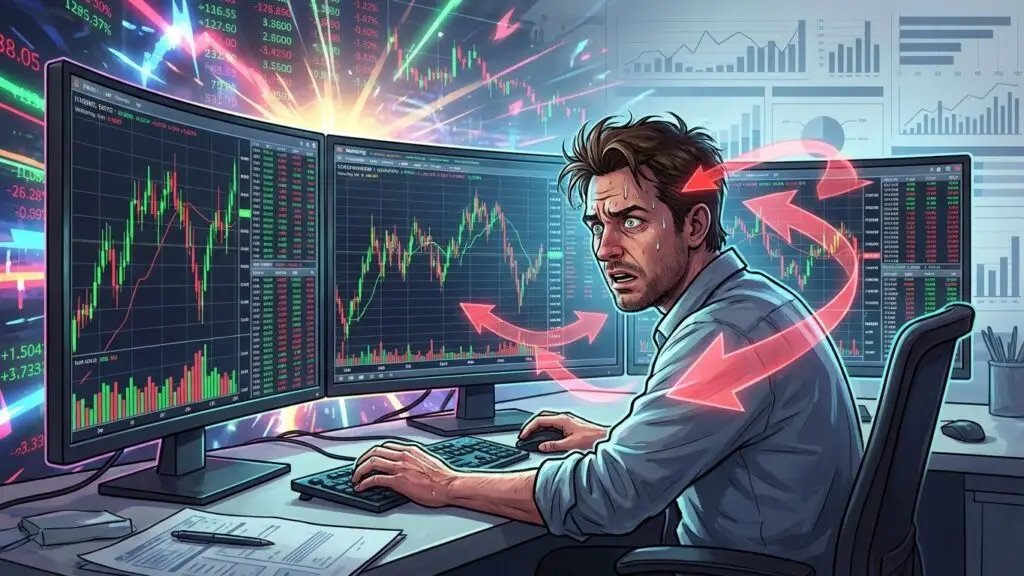
Many traders with ADHD gravitate toward scalping or high-frequency day trading. This isn’t always a strategic choice. Often, it is a response to ADHD trading impulses. Scalping provides immediate results. You don’t have to wait days for a swing trade to play out.
However, this fast-paced environment can lead to “revenge trading.” When you lose money, your brain demands a dopamine correction. You jump back into a bad position to “fix” the feeling. You aren’t trading the chart anymore; you are trading your emotions.
The Science of Impulse Control in Markets
The prefrontal cortex handles executive function and impulse control. In ADHD brains, this area often searches for higher levels of stimulation. In the context of the market, ADHD trading impulses manifest as clicking the “buy” button before the setup actually confirms.
Transitioning from impulsive to intentional trading requires a structural change. You cannot rely on willpower alone. Willpower is a finite resource. Instead, you must build systems that act as external brakes for your ADHD trading impulses.
Strategies to Manage ADHD Trading Impulses
To succeed, you must create a “friction-heavy” environment. The easier it is to trade, the easier it is to fail.
1. The 10-Second Rule: Before clicking execute, count to ten. This brief pause forces the logical brain to catch up with the impulsive midbrain.
2. Physical Checklists: Write down your entry criteria on paper. If the trade doesn’t hit every mark, your ADHD trading impulses are likely in control.
3. Hard Stops: Always use automated stop-losses. Never “mental stop” because your brain will negotiate with the loss to keep the dopamine loop alive.
( Space for your opinion/experience: Share a time when a checklist saved you from a disastrous impulsive trade here )
Turning Neurodiversity into a Trading Edge
Hyperfocus is a superpower when used correctly. While ADHD trading impulses cause trouble, your ability to process vast amounts of data quickly is an asset. You can see patterns that others miss. The key is to direct that focus toward deep research rather than frequent clicking.
You must learn to love the boredom. Professional trading is often boring. If you are trading for excitement, you are paying for entertainment. If you are trading for profit, you must find your excitement elsewhere. Managing ADHD trading impulses means accepting that a “no-trade day” is a successful day.
Using Technology to Curb ADHD Trading Impulses
Modern platforms offer tools to help neurodivergent traders. Many brokers allow you to set a “daily loss limit.” Once you hit that limit, the platform locks you out. This is the ultimate defense against ADHD trading impulses during a spiral.
Furthermore, use alerts instead of watching every tick. Watching the 1-minute chart is a trigger for many. Setting an alert for your price level allows you to step away. Stepping away reduces the constant pull of the screen.
I use broker-set daily loss limits and TradingView price alerts to prevent impulsive trades. I also use a second monitor only for higher timeframes and keep the 1-minute chart hidden. Blue-light–blocking glasses and app timers help me step away from the screen. These tools reduce stimulation and protect me from ADHD-driven overtrading.
Conclusion: Mastering Your Mind
Your brain is wired differently, and that is okay. You don’t need to change your biology to be a successful trader. You only need to change your environment. By recognizing ADHD trading impulses, you take away their power.
Start small today. Identify one impulsive habit you have. Create a rule to block it. Discipline in the markets is simply the practice of protecting yourself from your own worst tendencies. Over time, managing ADHD trading impulses will become second nature, and your equity curve will reflect your growth.
Medical Disclaimer
The information provided in this article is for educational and informational purposes only and does not constitute medical advice, diagnosis, or treatment. Always seek the advice of your physician or another qualified health provider with any questions you may have regarding a medical condition. Never disregard professional medical advice or delay in seeking it because of something you have read on this website. Trading involves significant risk and is not suitable for everyone.
Author: Dr. Nirosh