Nootropics for Traders: A Medical Review of L-Theanine and Ashwagandha
Trading demands intense mental focus, quick decision-making, and emotional stability. Consequently, many traders turn to nootropics for traders to gain a competitive edge. However, separating scientific evidence from marketing hype remains challenging. This medical review examines L-Theanine and Ashwagandha, two popular supplements that claim to enhance cognitive function and reduce stress in high-pressure environments.
Moreover, understanding how these compounds work in your brain can help you make informed decisions. Therefore, this article provides evidence-based insights into their mechanisms, benefits, and potential risks.
What Are Nootropics and Why Do Traders Use Them?
Nootropics are substances that may enhance cognitive function, memory, creativity, or motivation. Additionally, they’re sometimes called “smart drugs” or cognitive enhancers. Traders specifically seek these supplements to maintain focus during long market hours and manage the psychological stress of financial decision-making.
Furthermore, the trading environment creates unique mental demands. Rapid information processing, pattern recognition, and emotional regulation become critical for success. As a result, nootropics for traders have gained popularity as a potential solution.
In my experience, traders use nootropics to stay alert and focused during long trading sessions. They help manage stress and think clearly when markets move fast.
L-Theanine: The Calm Focus Compound
Scientific Mechanism of L-Theanine
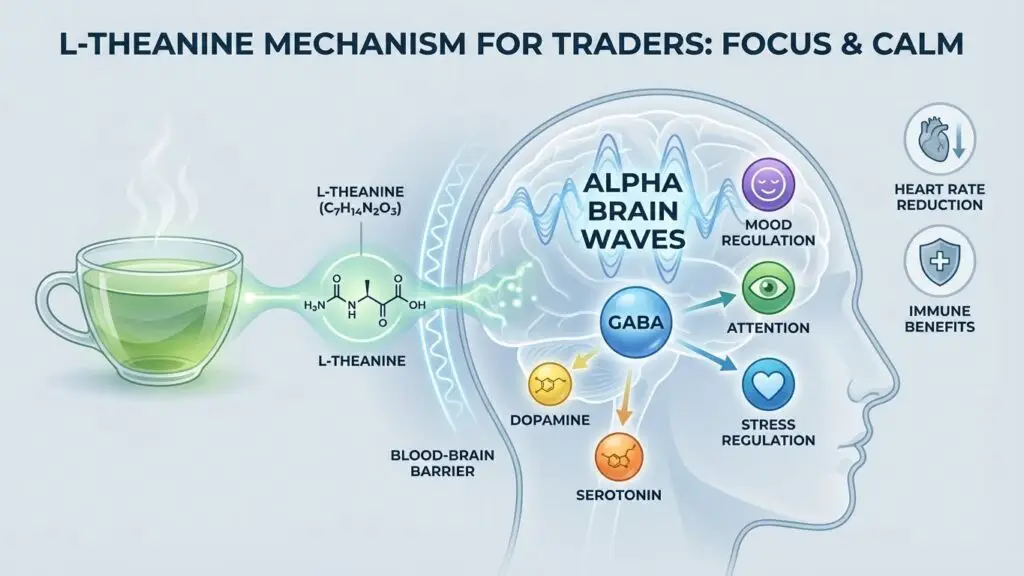
L-Theanine is an amino acid naturally found in green tea leaves. Research shows it crosses the blood-brain barrier and influences neurotransmitter activity. Specifically, it increases alpha brain wave activity, which promotes relaxation without sedation.
Moreover, L-Theanine modulates GABA, dopamine, and serotonin levels. These neurotransmitters regulate mood, attention, and stress responses. Clinical studies demonstrate that L-Theanine reduces physiological stress markers like heart rate and salivary immunoglobulin A.
Evidence-Based Benefits for Trading Performance
Multiple randomized controlled trials support L-Theanine’s cognitive benefits. A 2019 study published in Nutrients found that 200mg of L-Theanine improved attention and reaction time during demanding cognitive tasks. Similarly, research indicates it reduces anxiety without impairing alertness.
For traders, these effects translate to better focus during market volatility. Additionally, L-Theanine combined with caffeine shows synergistic effects. This combination reduces caffeine’s jittery side effects while maintaining enhanced alertness.
Several of my trading colleagues in USA say L-Theanine with coffee helps them stay calm and focused during volatile markets. They notice less jitters and clearer thinking on stressful days.
Recommended Dosage and Safety Profile
Clinical trials typically utilize dosages between 100–400mg daily, with 200mg being a common benchmark for acute cognitive tasks. Most research reports an excellent safety profile with minimal side effects. However, L-Theanine can potentially lower blood pressure; therefore, individuals on anti-hypertensive medications and pregnant women must consult a healthcare provider before use.
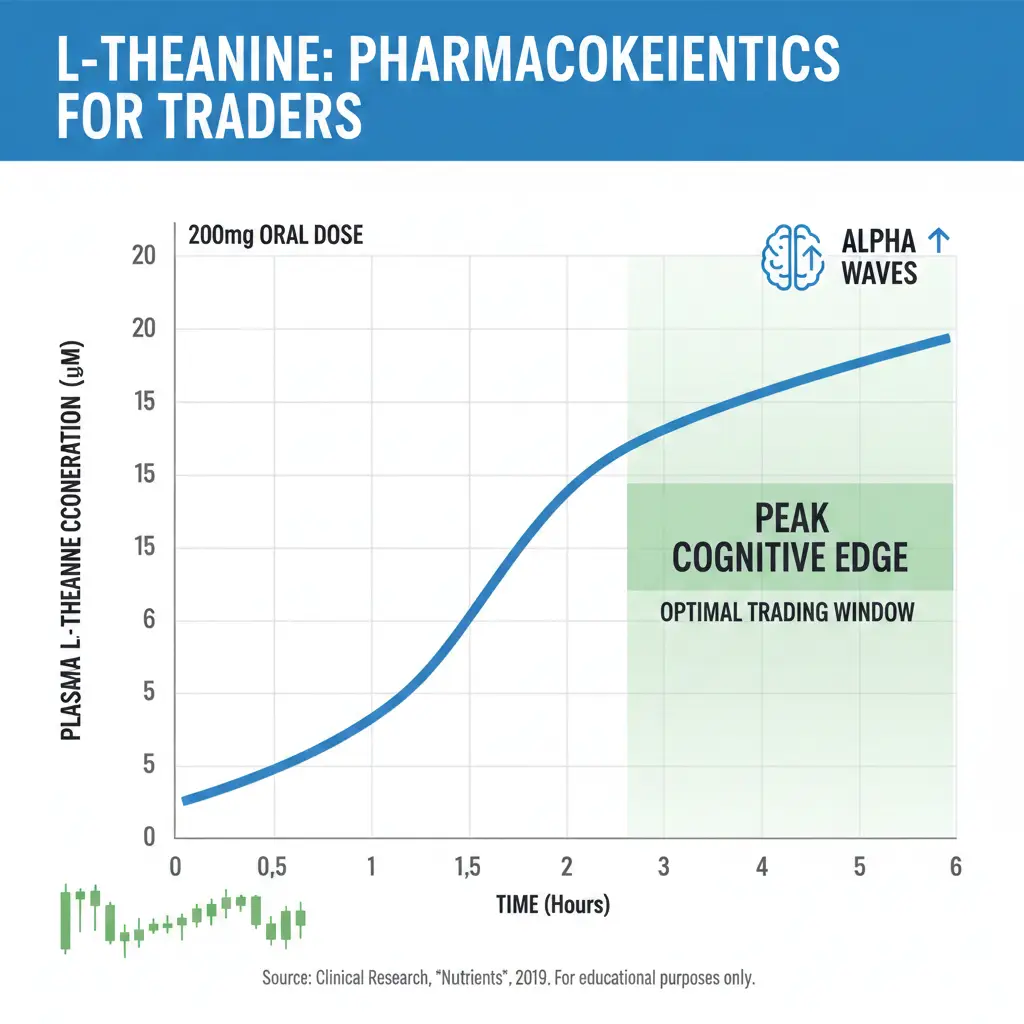
Understanding the pharmacokinetics of L-Theanine is key for trading performance. Research indicates that:
Onset of Action: Effects typically begin within 30–60 minutes of ingestion.
Peak Concentration: Maximum effects on alpha brain wave activity generally occur 1–2 hours post-consumption.
To optimize your “calm focus” window, consider timing your intake approximately one hour before the market open or during periods of anticipated high volatility.
Ashwagandha: The Stress-Reducing Adaptogen
How Ashwagandha Affects Stress and Cognition
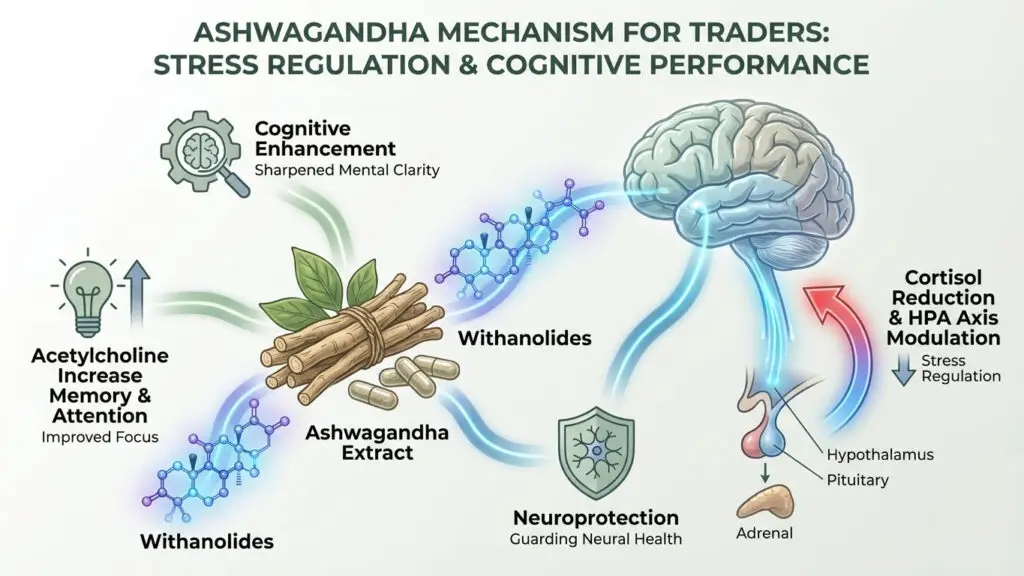
Ashwagandha (Withania somnifera) is an adaptogenic herb used in traditional Ayurvedic medicine. Modern research confirms its ability to reduce cortisol levels and modulate the hypothalamic-pituitary-adrenal (HPA) axis. This system controls your body’s stress response.
Additionally, Ashwagandha contains active compounds called withanolides. These molecules exhibit neuroprotective properties and may enhance memory formation. Studies show it increases acetylcholine levels, a neurotransmitter essential for learning and attention.
Clinical Evidence for Traders’ Needs
A systematic review in the Journal of Alternative and Complementary Medicine analyzed eight randomized controlled trials. Results showed significant reductions in stress and anxiety scores compared to placebo. Moreover, participants reported improved sleep quality and mental clarity.
Another double-blind study demonstrated that 300mg of Ashwagandha twice daily reduced cortisol levels by 27.9% over 60 days. For traders facing chronic stress, this cortisol reduction may prevent burnout and decision fatigue.
In my experience, traders who use Ashwagandha report feeling calmer during high-pressure sessions. They manage stress better, sleep more soundly, and make clearer decisions without burning out.
Dosage Guidelines and Potential Side Effects
In clinical research, the most common effective dosage range for Ashwagandha is 300–600mg daily, often split into two doses to maintain stable levels in the system. For consistent results, it is crucial to look for extracts standardized to contain at least 5% withanolides, which are the active compounds responsible for its adaptogenic effects.
While generally well-tolerated, some users may experience mild digestive upset when first starting. However, it is essential to consult with your healthcare provider before beginning any new supplement, especially if you have a pre-existing condition. Certain populations must exercise extra caution:
Pregnancy: Ashwagandha should be avoided as it may have abortifacient properties.
Autoimmune/Thyroid Conditions: Because it can modulate the immune system and thyroid hormone levels, professional medical supervision is required for individuals with these conditions.
Comparing L-Theanine and Ashwagandha for Trading
Both supplements offer distinct advantages for nootropics for traders protocols. L-Theanine provides acute, same-day benefits for focus and calm alertness. In contrast, Ashwagandha requires consistent use over weeks to build stress resilience.
Therefore, many traders combine these supplements strategically. L-Theanine serves as an immediate performance enhancer during trading sessions. Meanwhile, Ashwagandha works as a long-term stress management tool.
Additionally, their safety profiles make them suitable for daily use. Unlike prescription stimulants, neither substance carries addiction risk or significant withdrawal symptoms.
The Reality Check: Limitations and Hype
Despite promising research, nootropics for traders aren’t miracle solutions. Individual responses vary significantly based on genetics, lifestyle, and baseline stress levels. Moreover, supplements cannot replace fundamental practices like adequate sleep, proper nutrition, and stress management techniques.
Furthermore, the supplement industry faces regulation challenges. Product quality and potency vary between manufacturers. Third-party testing certifications like USP or NSF help ensure you’re getting what the label promises.
Many of my trading colleagues say nootropics help them focus, but they aren’t a shortcut. Everyone’s results differ, and good sleep, diet, and stress management remain essential.
Practical Implementation Strategy
To achieve the best results with nootropics for traders, I recommend a systematic, data-driven approach rather than a “shotgun” method of taking everything at once.
Isolation Testing: Start with one supplement at a time for at least 7–14 days. This allows you to assess its specific impact on your unique biochemistry and trading performance.
The Performance Journal: Track variables such as morning heart rate, focus duration, and emotional reactivity (impulse trades).
Strategic Cycling: To prevent receptor down-regulation and maintain effectiveness, consider a “cycling” protocol. A common research-backed approach is a 5-days-on, 2-days-off schedule (matching the trading week) or a week-long break every month.
Synergy through Lifestyle: Supplements are “force multipliers,” not replacements. Optimization of sleep hygiene, hydration, and regular exercise will significantly amplify the benefits of any nootropic protocol.
Conclusion: Evidence-Based Approach to Nootropics for Traders
L-Theanine and Ashwagandha represent well-researched options for traders seeking cognitive enhancement and stress management. Scientific evidence supports their benefits, though individual results may vary. Therefore, approach nootropics for traders with realistic expectations and a commitment to overall wellness.
Remember that sustainable trading performance depends on multiple factors. Supplements serve as useful tools within a comprehensive approach to mental and physical health. Consequently, they work best when combined with proper rest, nutrition, and stress management practices.
Medical Disclaimer
This article is for informational purposes only and does not constitute medical advice. The information contained herein is not intended to diagnose, treat, cure, or prevent any disease. Always consult with a qualified healthcare provider before starting any new supplement regimen, especially if you have pre-existing medical conditions or take prescription medications. Individual results may vary, and the supplements discussed may interact with certain medications or medical conditions. Pregnant or nursing women should not use these supplements without medical supervision.